Leave Your Message

10 Best Women's Hoodies for Wholesale Buyers?

Choosing the right Women's Hoodies for wholesale means looking beyond a good product photo. Buyers need to compare fabric weight, fiber content, stitching, fit, size range, and available colors. A fleece hoodie can feel soft on a showroom table yet run hot in everyday wear. Small details matter.

Fashion designer Coco Chanel once said, “Fashion is architecture: it is a matter of proportions.” That idea applies to hoodies, too. Shoulder seams, sleeve length, hood shape, and body width all affect how a style looks across different sizes. For wholesale buyers, a sample is more informative than a spec sheet alone. Check the garment after washing, inspect the seams, and compare measurements against your intended customer.

This guide examines 10 Women's Hoodies worth considering for wholesale orders, from everyday basics to more distinctive styles. It covers practical factors such as fabric feel, construction, size consistency, color choices, and ordering terms. These details can help buyers ask sharper questions before placing an order. No single hoodie suits every store. A lower price may come with compromises, and a popular color may not sell equally well in every market. That is worth admitting. Use the comparisons as a starting point, then request samples and confirm current specifications directly with suppliers.
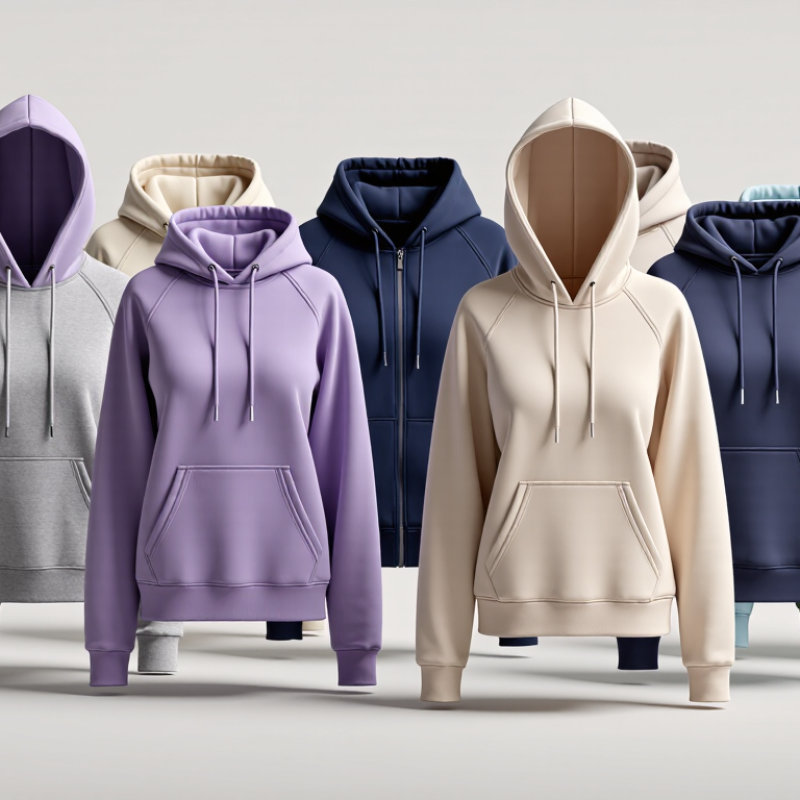
10 Best Women's Hoodies for Wholesale Buyers?

Define Wholesale Criteria: MOQ, Landed Cost, Lead Time, and Target Margin

A hoodie quote is not a buying decision until MOQ, landed cost, lead time, and margin are clear.

Ask for MOQ by color and size, plus carton quantities; a low unit price can hide an awkward size mix. UNCTAD’s Review of Maritime Transport 2024 reports that over 80% of world merchandise trade by volume moves by sea, making freight exposure relevant even for basic fleece styles.

Request a landed-cost estimate covering garment, packaging, freight, insurance, duties, and delivery to your warehouse. Treat it as an estimate, not a promise. Freight, exchange rates, and port delays can shift the final figure.

Lead time should include fabric booking, sampling approval, production, inspection, and transit—not just sewing days. Build a buffer around seasonal launches.

Then test target margin against landed cost: at an $18 landed cost, a 55% gross margin requires a $40 wholesale price, before overheads. Check whether that price fits your customers’ expected retail range.

Tight math matters. A margin target can look healthy on paper and still fail after markdowns or unsold sizes. Compare suppliers using the same assumptions, and record what changed between quote and delivery. That part is easy to overlook.

Rank 10 Hoodie Styles by Fabric Weight Using ASTM D3776 GSM Tests

ASTM D3776 measures fabric mass per unit area; it does not certify warmth, durability, or quality. For wholesale comparisons, test conditioned, representative swatches and record results in grams per square meter. The rankings below are practical buying bands, not ASTM requirements. Actual results vary by knit, fiber blend, and finishing.

1. Cropped French terry hoodie: 220–260 GSM, light and easy to layer.
2. Lightweight zip hoodie: 240–280 GSM, suited to mild weather.
3. Classic French terry pullover: 260–300 GSM, with visible loopback texture.
4. Unbrushed relaxed hoodie: 280–320 GSM, comfortable without a fuzzy interior.
5. Standard brushed-fleece hoodie: 300–340 GSM, a familiar midweight option.
6. Oversized drop-shoulder hoodie: 330–370 GSM, with a fuller drape.
7. Double-layer hooded sweatshirt: 350–400 GSM body fabric; assess the hood separately.
8. Sherpa-lined hoodie: 360–420 GSM shell fabric; test lining as a separate layer.
9. Dense heavyweight pullover: 400–450 GSM, often noticeably structured.
10. Reinforced workwear-style hoodie: 450–500 GSM, firm and substantial.

Check multiple swatches from each production lot. One sample can mislead. A 320 GSM fabric may still feel limp, while a lighter, tighter knit can feel sturdy. Record test method, sample location, and average GSM, then compare like with like.

Compare Fiber Blends Using ISO 1833 and FTC 16 CFR Part 303

For wholesale hoodie buyers, fiber labels are specifications, not decoration. Textile Exchange’s 2024 Materials Market Report estimates that global fiber production reached 124 million tonnes in 2023, with polyester accounting for about 57%. That scale helps explain why cotton-polyester blends are common. But percentages alone cannot predict fleece warmth, pilling, or shrinkage. Feel the brushed interior, then compare the supplier’s stated composition with a laboratory report.

ISO 1833 is a series of methods for quantitatively analyzing fiber mixtures. The appropriate method depends on the blend; cotton-polyester and cotton-elastane may require different procedures. In the United States, FTC 16 CFR Part 303 sets textile labeling requirements, including generic fiber names and percentages by weight. Ask suppliers for the test method, sample identity, and results before approving bulk labels. Small caveat: one swatch may not represent every dye lot.

Compare like-for-like hoodie panels, not just specification sheets. Weigh the fabric, inspect the cuffs, and record dimensions after washing. Ask whether recycled fibers are included in the stated composition. Textile Exchange reports that recycled polyester made up roughly 12% of polyester production in 2023. Useful context, not proof of a garment’s composition. Repeat checks when the mill, color, or finish changes; small inconsistencies can affect fit and returns.

Assess Women’s Size Grading Against ASTM D5585 Body Measurements

10 Best Women’s Hoodies for Wholesale Buyers?

Women’s hoodie sizing should begin with measured bodies, not a supplier’s familiar chart. ASTM D5585 provides standardized body measurements for adult female misses, including bust, waist, hip, back waist length, and arm length. It is a useful comparison framework, not a guarantee of consumer fit. The SizeUSA national body-scanning study measured more than 10,000 people and revealed substantial variation in female body shapes. That finding still matters when reviewing today’s grading rules.

A wholesale buyer should compare each hoodie size against ASTM D5585 landmarks. Check whether the bust grows faster than the waist. Review sleeve length separately. A larger size may need more hip room, yet many grading systems simply add equal width everywhere. That shortcut can create tight armholes and excessive body volume. CDC/NCHS anthropometric reports also show meaningful differences in waist and body measurements across age groups. One chart cannot represent every customer. It is an uncomfortable limitation, but ignoring it increases return risk.

Tips: Request the supplier’s complete grading increments, not only the base size. Measure a physical sample after washing. Record bust, hem, sleeve, and hood opening dimensions. Compare them with ASTM D5585 and your own sales data. Keep one imperfect sample for review. It often exposes assumptions that spreadsheets hide. Use customer returns as evidence, not noise.

10 Best Women’s Hoodies for Wholesale Buyers? — Assess Women’s Size Grading Against ASTM D5585 Body Measurements

A practical shortlist of hoodie types for wholesale evaluation. Fabric weights and specifications are indicative industry-planning ranges, not measurements of named products. ASTM D5585 provides body measurements; it does not prescribe hoodie garment dimensions or establish a hoodie fit pass/fail result. Compare each size’s garment measurements with the relevant body measurements, then account for intended fit ease.

# Hoodie Type Typical Fabric Option Indicative Fabric Weight Common Fit Size-Grading Check Against ASTM D5585 Wholesale Evaluation Note
1 Classic pullover fleece hoodie Cotton/polyester fleece blend Approx. 280–340 g/m² Regular Compare chest circumference with the corresponding bust measurement; check sleeve and body length separately. Versatile core option; confirm shrinkage and post-wash measurements.
2 Full-zip fleece hoodie Cotton/polyester fleece or sweatshirt knit Approx. 260–330 g/m² Regular to relaxed Check bust ease with the zipper closed; inspect front width and zipper waviness across sizes. Useful layering style; zipper length and pocket placement should remain balanced through the size range.
3 Lightweight French terry hoodie Cotton or cotton-blend French terry Approx. 220–280 g/m² Regular Check bust, waist, and hip coverage against body measurements; lightweight fabric may show tension sooner. Suitable for transitional seasons; review fabric recovery and seam stability.
4 Oversized drop-shoulder hoodie Cotton/polyester fleece or heavyweight sweatshirt knit Approx. 300–380 g/m² Oversized Distinguish intentional oversized ease from grading drift; check chest and hem proportions at every size. Specify the intended silhouette clearly so buyers do not mistake designed ease for inconsistent sizing.
5 Cropped pullover hoodie French terry or cotton-blend fleece Approx. 240–320 g/m² Relaxed, cropped length Audit body length independently of bust grading; maintain consistent hem position across the size range. Confirm crop length and layering expectations in the product specification.
6 Raglan-sleeve hoodie Cotton/polyester fleece or French terry Approx. 250–340 g/m² Regular to relaxed Check bust ease and across-back fit; inspect raglan seam placement and sleeve length by size. Raglan construction can support mobility; verify sleeve grading does not distort the armhole fit.
7 Performance hoodie Polyester knit or cotton/polyester performance blend Approx. 180–260 g/m² Athletic, close to regular Assess bust and upper-arm ease for intended movement; test stretch and recovery as well as static measurements. Confirm fiber content, care instructions, and whether the fit is intended for training or casual wear.
8 Tunic-length hoodie Cotton-blend fleece or French terry Approx. 250–340 g/m² Relaxed, longer body Check hip circumference and hem sweep against the intended coverage; do not infer hip fit from bust grading alone. Review side-seam shape and hem width across sizes for comfortable movement.
9 Plus-size extended-range hoodie Cotton/polyester fleece or French terry Approx. 260–360 g/m² Regular to relaxed Check bust, waist, and hip measurements throughout the offered range; review proportions rather than simply scaling up a smaller sample. Request fit samples across multiple sizes and document the intended size chart and ease.
10 Lightweight zip-through hoodie Light French terry or sweatshirt jersey Approx. 200–280 g/m² Regular, layering fit Compare closed-garment chest measurement with bust reference and intended layering ease; check hem and sleeve grading. A lighter option for layering; confirm zipper performance and fabric opacity.

Buyer’s grading checklist: Use the applicable ASTM D5585 body measurements as the reference, measure garments consistently, state whether measurements are garment circumferences or flat widths, and document the intended ease and fit. ASTM body measurements are not finished-garment specifications.

Verify Colorfastness and Wash Durability with AATCC Test Methods 8 and 135

10 Best Women's Hoodies for Wholesale Buyers?

Wholesale buyers should verify colorfastness before approving large hoodie orders. AATCC Test Method 8 measures color transfer during dry and wet rubbing. Ask an independent laboratory to test dark cuffs, seams, and brushed fleece surfaces. These areas often release loose dye first. The lab compares staining on a standard white fabric using a grading scale.

Test both conditions. Dry rubbing reflects handling during packing and retail display. Wet rubbing creates a tougher challenge. Sweat, rain, or damp storage may increase color transfer. A low grade can lead to complaints about pale shirts, stained bags, or marked skin. Request samples from different production lots. One approved sample is not enough.

AATCC Test Method 135 evaluates dimensional changes after home laundering. Measure the hoodie before washing, then record length, chest width, sleeve length, and hood opening afterward. Follow the specified washing and drying settings carefully. Record every cycle. Five cycles can reveal shrinkage that one cycle hides. Watch the ribbed hem closely. It may tighten unevenly. Review twisting, seam torque, and fabric growth as well.

In one production review, the color result passed, but the sleeves shortened noticeably. That was not a complete success. Test results need practical judgment. Buyers should compare laboratory data with real handling, packaging, and customer care instructions. A repeat test may be wise when fabric weight, dye shade, or finishing changes. Small changes matter.

10 Best Women’s Hoodies for Wholesale Buyers: Colorfastness & Wash Durability

Compare key fabric checks using AATCC Test Methods 8 and 135. The sample results below are illustrative only—not laboratory results or product rankings.

How to read: AATCC 8 assesses color transfer from rubbing; higher gray scale grades indicate less staining. AATCC 135 assesses dimensional change after home laundering under specified test conditions. Shrinkage figures shown are illustrative; buyers should agree on laundering conditions and acceptance limits with their testing laboratory.