China Top Men's Shorts Manufacturers for Global Buyers
Choosing China’s top Men's Shorts manufacturers requires more than comparing catalog photos or factory claims. Global buyers need dependable evidence, practical communication, and products that perform after repeated washing. This guide examines manufacturers through an experienced sourcing lens, focusing on fabric quality, sewing consistency, production capacity, and export readiness. Cotton twill, recycled polyester, nylon, and stretch blends can serve different markets. Each choice affects comfort, durability, drying time, and final pricing.
Reliable evaluation begins with samples. Check waistband recovery, drawcord strength, pocket reinforcement, zipper movement, and seam alignment. A strong supplier should explain its quality-control process clearly. Buyers should also review factory audits, material test reports, social compliance records, and certifications relevant to their target markets. Production details matter too, including minimum order quantities, sampling time, lead times, packaging, and inspection procedures. Clear records reduce avoidable surprises.
Still, no factory is perfect. A polished website does not prove consistent production. Even experienced buyers can overlook shade variation between fabric lots or small measurement changes after washing. That risk deserves attention. The best partnerships develop through transparent discussions, realistic specifications, and documented approvals. This overview highlights capable Chinese manufacturers while encouraging independent verification before any large order. Practical evidence matters more than impressive promises.
Types of Men’s Shorts Offered by Chinese Manufacturers
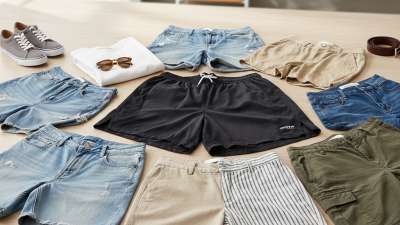
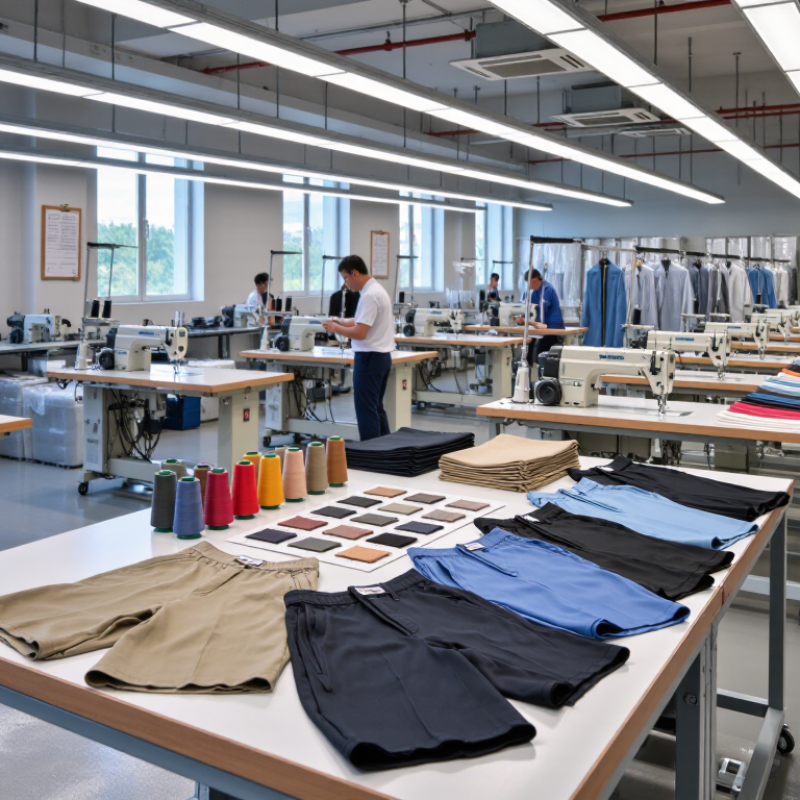
Chinese manufacturers offer a broad range of men’s shorts for global buyers. Common options include chino shorts, cargo shorts, denim shorts, swim shorts, running shorts, hiking shorts, and fleece lounge styles. Each category needs different construction. Chinos often use cotton twill with 180–260 GSM fabric. Running shorts need lightweight polyester, mesh panels, and secure waistbands. Cargo styles require reinforced pockets and stronger bartacks. Swim shorts depend on quick-drying fabric, lining, and saltwater-resistant trims.
Textile Exchange’s Materials Market Report 2024 states that global fiber production reached about 124 million tonnes in 2023. It may rise to 160 million tonnes by 2030. This pressure makes recycled polyester, organic cotton, and blended fabrics more relevant. However, material claims need testing and traceable documentation. McKinsey’s State of Fashion 2025 describes fashion growth as low single digits. Buyers should control inventory risk. A large order is not always a smart order.
Tips: Share a detailed tech pack before sampling. Specify fabric composition, GSM, measurements, shrinkage limits, colorfastness, and pocket strength. Request size-set samples, not only one prototype. Check stitching after repeated washing. Ask for independent laboratory reports when performance claims matter. Photos can hide weak seams. That part deserves more attention. Also compare MOQ, lead time, packaging, and defect-repair procedures before selecting a Chinese manufacturer.
Key Manufacturing Regions and Production Capabilities in China
China remains a major sourcing base for men’s shorts, but regional capabilities differ sharply. The WTO reported that China supplied about 31% of global textile and apparel exports in 2022. China Customs data also recorded approximately USD 293.6 billion in textile and clothing exports in 2023. These figures show scale, not automatic quality.
Guangdong supports flexible production near fabric, accessory, and export logistics networks. Factories around Guangzhou and Dongguan often handle quick sampling, printed shorts, lightweight nylon, and small design changes. Zhejiang is strong in knitted fabrics, elastic waistbands, and high-volume commercial styles. Ningbo and nearby production clusters suit buyers needing stable repeat orders. Jiangsu, especially Nantong, has deeper experience with cotton, home-textile-related fabrics, and integrated finishing. Fujian offers strong sportswear sewing capacity, including polyester blends, mesh panels, and heat-transfer details.
The details matter. A capable factory should show fabric test records, shrinkage results, colorfastness data, and real production samples. Shorter lead times can still hide rushed inspections. Regional labels can mislead. Some workshops subcontract cutting or washing, which complicates traceability. Buyers should verify the actual sewing floor, needle control, inline inspection, and packing process. The China National Textile and Apparel Council has repeatedly highlighted pressure from weaker global demand and rising production costs. That pressure may encourage efficiency, but it can also reduce attention to small defects. A pre-production sample remains necessary. So does an honest factory audit.
How to Evaluate Quality, Materials, and Compliance Standards
China Top Men's Shorts Manufacturers for Global Buyers
When evaluating Chinese men’s shorts manufacturers, begin with physical samples, not catalog images. Check fabric weight, fiber content, shrinkage, and colorfastness after washing. Cotton, recycled polyester, nylon, and blends perform differently in heat, moisture, and repeated laundering. A reliable supplier should explain yarn quality, fabric origin, and finishing methods clearly. Measure waistbands, pocket depth, inseam length, and stitching density. Loose threads around the crotch are warning signs. Small details matter.
Tips: Request a pre-production sample and a sealed reference sample. Test washing, rubbing, seam strength, and dimensional stability through an independent laboratory. Review the factory’s quality records, production capacity, and corrective-action reports. Compliance also requires careful verification. Ask for current reports covering chemical safety, labeling, flammability where applicable, and social responsibility requirements for your target market. Certificates alone are not proof of daily control. Visit the facility when possible, or arrange a documented third-party inspection.
Do not judge quality from one perfect sample. Production can change when orders become larger. I have seen attractive prototypes hide uneven waist elastic and inconsistent dye lots. That is easy to overlook. Set measurable tolerances for measurements, shade variation, stitching, and packaging before signing approval. Confirm who pays for rework and how rejected goods are handled. Honest communication is useful, but written evidence protects both sides. Recheck critical points before shipment, because assumptions often become expensive mistakes.
Private Label, Custom Design, and OEM/ODM Service Options
China’s leading men’s shorts manufacturers now support private label, custom design, and OEM/ODM production. These options help global buyers control fit, fabric, packaging, and retail positioning. Textile Exchange’s Materials Market Report 2024 recorded global fiber production at 124 million tonnes in 2023. That figure highlights the need for better material decisions.
Private label projects usually begin with a tech pack, size chart, logo artwork, and approved fabric swatches. Custom design requires deeper development. Buyers may specify recycled polyester, cotton blends, stretch percentages, pocket depth, waistband tension, and embroidery placement. Experienced factories can convert these details into patterns and prototypes. They should also test shrinkage, colorfastness, seam strength, and washing performance before bulk production.
OEM and ODM services offer different levels of control. OEM follows the buyer’s design, while ODM adapts an existing factory concept. Sampling still fails sometimes. A waistband may twist, or the drawcord may feel too short. Careful buyers request a revised sample and a pre-production inspection. The International Organization for Standardization identifies ISO 2859-1 as a widely used acceptance-sampling standard for manufacturing inspections. Clear tolerances matter more than attractive promises. Buyers should confirm minimum order quantities, lead times, fabric certificates, packaging specifications, and corrective-action procedures in writing.
Ordering, Pricing, Shipping, and Supplier Verification Considerations
China Top Men’s Shorts Manufacturers for Global Buyers
Ordering men’s shorts starts with a measurable specification sheet.
State fabric composition, weight, waistband width, pocket depth, stitching density, size tolerance, and packaging details. Request a pre-production sample before placing a bulk order. A low quote may hide weaker fabric or missing trims. That mistake is expensive. Compare at least three factories using the same request. Quote terms should clearly separate EXW, FOB, and CIF pricing. The WTO’s World Trade Statistical Review identifies China as the world’s largest clothing exporter, but export scale does not guarantee consistent factory performance.
Supplier verification needs more than polished photos.
Check the registered business name, production address, export history, machine capacity, and recent inspection records. Ask for a live video showing cutting, sewing, pressing, and final inspection. Independent audits can verify worker safety, quality systems, and material traceability. Some suppliers outsource most production; that is not automatically unacceptable, but it must be disclosed. Sample measurements should be recorded in a signed approval sheet. Even then, defects can occur.
For shipping, confirm carton dimensions, gross weight, loading port, and customs documents before production.
The World Bank’s 2023 Logistics Performance Index ranked China 19th globally, reflecting strong logistics capability, not guaranteed delivery speed. Standard production may take 25–45 days after approval, while sea freight requires additional time. Build a buffer for holidays and inspection delays. Small orders can reduce risk, though their unit prices are usually higher. The cheapest option is not always the most reliable.